

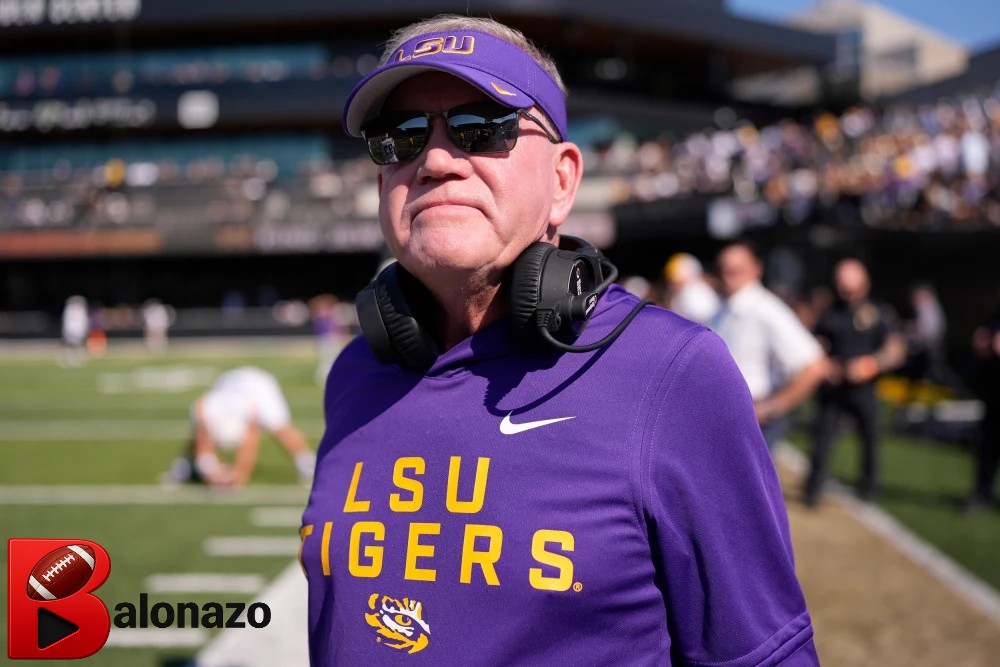
LSU’s high-stakes gamble on Brian Kelly has ended abruptly — and the price tag could reach $54 million.
The Tigers, who entered the season with College Football Playoff ambitions, fired Kelly midway through his fourth year after a 5–3 start capped by a lopsided loss to Texas A&M. The move makes LSU the latest blueblood program to swallow a massive buyout to change course, coming just two weeks after Penn State dismissed James Franklin despite a buyout near $50 million.
If LSU pays Kelly in full, it would mark the second-largest buyout in college football history. However, that total could shrink depending on Kelly’s future coaching earnings, according to The Advocate. Athletic director Scott Woodward signaled the school’s intent to negotiate a reduced settlement, saying LSU “will work toward a path that is better for both parties.”
Woodward said the decision came after Saturday’s defeat at Texas A&M — a game that improved the Aggies to 8–0 and underscored why some wealthy programs are increasingly willing to absorb staggering financial hits to reset their football fortunes. Texas A&M faced heavy criticism two years ago for firing Jimbo Fisher and paying out a record $77 million, yet the Aggies have since thrived under coach Mike Elko.
Even Louisiana Gov. Jeff Landry weighed in after the loss, posting on X that LSU’s Board of Supervisors “needs to rethink their actions to raise ticket prices for next year after tonight’s showing!”
Kelly’s tenure began with massive expectations when LSU lured him from Notre Dame in 2022 on a 10-year, $95 million deal — a contract meant to keep the Tigers in the national championship hunt. But in Baton Rouge, patience is rare: all three of Kelly’s predecessors won national titles.
Kelly departs with a 34–14 record, including two 10-win seasons, but LSU missed last year’s expanded 12-team playoff and fell out of contention again after dropping three of its past four games — all against ranked opponents.
“When Coach Kelly arrived at LSU four years ago, we had high hopes that he would lead us to multiple SEC and national championships,” Woodward said. “Ultimately, the success at the level LSU demands simply did not materialize.”
